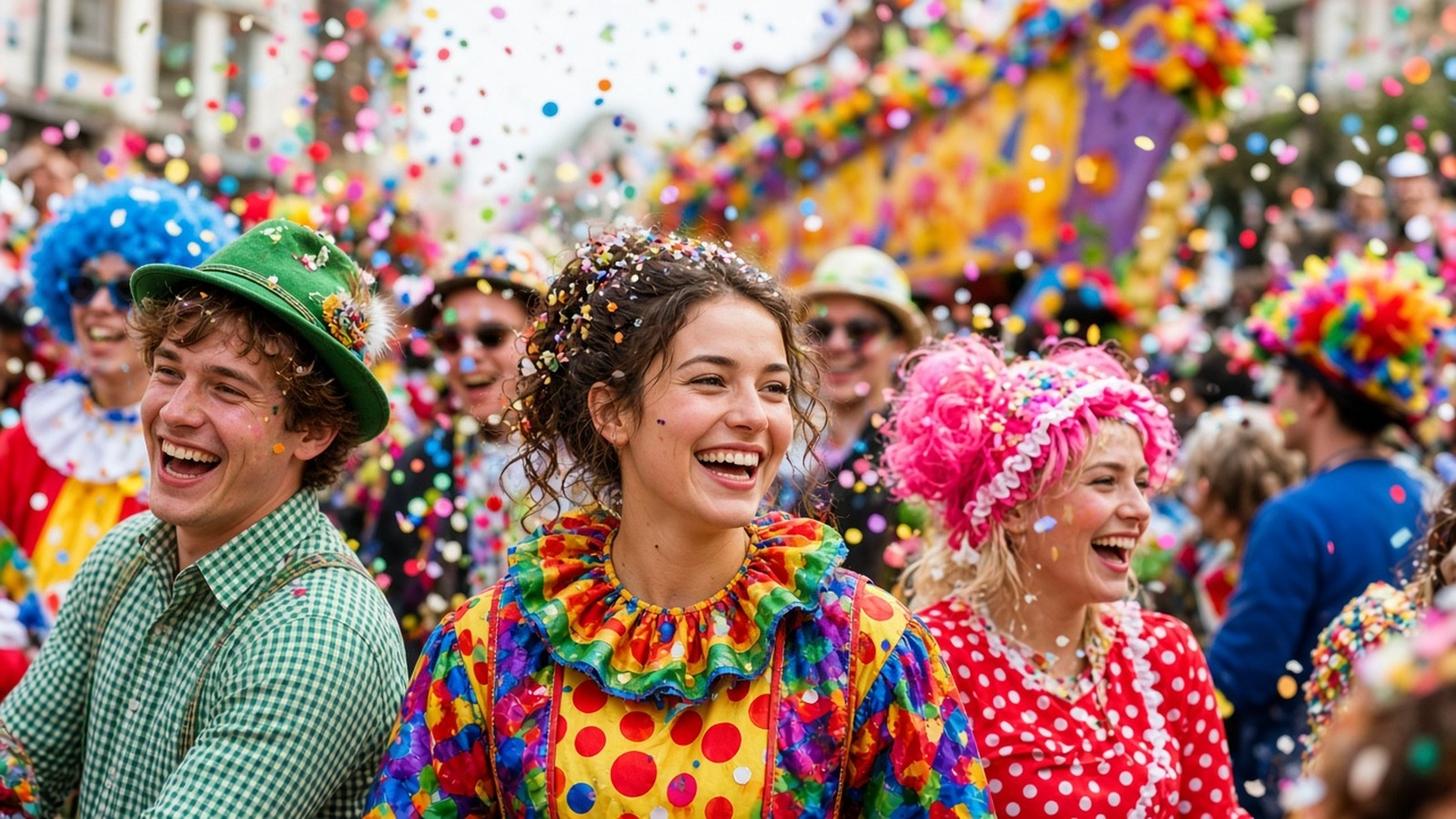
Every year on 11 November at 11:11, cities like Cologne and Düsseldorf burst into costume, music and street parties. Here is how Sri Lankan students can join Karneval, Germany's colourful "fifth season", and love every minute of it.
Many Sri Lankan students expect Germany to be quiet, punctual and serious. Then their first Karneval arrives, and suddenly the same city is full of pirates, lions, clowns and astronauts dancing in the street at eleven in the morning. Germans call this time the “fifth season” (die fünfte Jahreszeit), and for a few days it turns some of the most organised cities in Europe into one huge, friendly party.
If you are planning to study in Germany, Karneval is one of those experiences you will tell your family about for years. So here is a simple guide to what it is, where it happens, when it happens in the 2026/27 season and how to enjoy it as a student.
What Karneval actually is
Karneval, also called Fasching or Fastnacht depending on the region, is a carnival tradition connected to the weeks before Lent. In practice, however, most people today simply see it as a joyful festival of costumes, parades, music and community spirit. Karneval clubs work all year on floats, dances and shows, and whole neighbourhoods come together to celebrate.
The season officially opens on 11 November at exactly 11:11. After that, there are indoor sessions with comedy and music during the winter. The big street celebrations then come in the week before Ash Wednesday, which moves every year because it depends on the date of Easter.
The key dates for the 2026/27 season
For the coming season, the official Cologne and Düsseldorf tourism pages list these dates, so you can already mark your calendar:
- Season opening: Wednesday, 11 November 2026, at 11:11
- Weiberfastnacht (start of street carnival): Thursday, 4 February 2027
- Rosenmontag (Rose Monday parades): Monday, 8 February 2027
- Carnival Tuesday: 9 February 2027
- Ash Wednesday, when it all ends: 10 February 2027
Programmes and times can still change, so it is always worth checking the official city or Karneval club websites closer to the day.
Cologne: the capital of Karneval
Cologne (Köln) is the city most Germans think of first. According to Cologne Tourism, the city has around 480 Karneval associations, and more than a million people regularly come for the Rosenmontag parade. The official Cologne Karneval committee says the 2026 parade had about 11,500 participants and stretched over 8 kilometres, while the route itself is about 7.5 kilometres long.
The most fun part for newcomers is the “Kamelle”. People on the floats throw sweets, chocolate and small flowers into the crowd. The committee lists around 300 tonnes of sweets for the parade, so you will not go home empty-handed. When a float passes, you shout “Kamelle!” for sweets and “Kölle Alaaf!” as the Cologne cheer.
On Weiberfastnacht, the street carnival opens at 11:11 at the Alter Markt in the old town. There is also a fun tradition where women cut off men’s ties on that day, so if you wear a tie, expect to lose it.
Düsseldorf and Mainz: a friendly rivalry
Just a short train ride away, Düsseldorf celebrates just as loudly. However, people there shout “Helau” instead of “Alaaf”, and you should never mix the two up in Cologne. Visit Düsseldorf lists “Hoppeditz’ Erwachen” on 11 November 2026 at 11:11 at the Marktplatz, when a jester figure wakes up and opens the season with a cheeky speech. Its Rosenmontag parade on 8 February 2027 is famous for satirical political floats.
Further south, Mainz is another great Karneval city. The Mainz Fastnacht fair runs from 4 to 9 February 2027 in the old town, and the Rosenmontag parade is on 8 February, so students in Frankfurt, Mainz or Wiesbaden have a big celebration right on their doorstep.
The south has its own magical version
If you study in Baden-Württemberg, you will meet a very different style called Swabian-Alemannic Fasnet. Instead of colourful costumes, people wear hand-carved wooden masks and traditional outfits that are often passed down through families. In Rottweil, the famous “Narrensprung” parade is planned for 8 February 2027 at 8:00 and twice on 9 February 2027, according to the town’s tourism office. It feels less like a party and more like stepping into a living fairy tale, which makes it a perfect day trip.
Why Karneval is great for international students
Karneval is one of the easiest ways to feel part of German life quickly. Strangers sing together, people link arms and sway to songs, and almost everyone is happy to explain a tradition to a curious newcomer. Because everybody is in costume, nobody looks like a tourist, and that helps you feel like you belong.
It is also a fantastic way to practise German. Many Karneval songs are simple and repeated again and again, so after one season you will probably know a few by heart. Your flatmates, classmates or language tandem partner will love teaching you the local words, especially in Cologne, where many songs are in the local Kölsch dialect.
Karneval can also be very budget friendly. Watching a parade from the street is free, the sweets are free, and a costume does not need to be expensive. Many students simply buy a cheap wig, paint their face or put together an outfit from things they already own. Second-hand shops and flatmate swaps work well too.
Practical tips for your first Karneval
To enjoy the day safely and stress-free, keep these tips in mind:
- Dress warmly under your costume. Street carnival happens in February, which means it can be cold and wet. Layers, warm socks and comfortable shoes matter more than a perfect outfit.
- Use public transport. Many streets close for parades, so trams and trains are the easiest way to move around. The Deutschlandsemesterticket, which many universities include, covers local and regional transport in Germany.
- Leave glass bottles at home. Cologne regularly sets glass-free zones in busy areas such as the old town and the student quarter around Zülpicher Straße, and drinks can be refilled into plastic cups at the entrances. Big speakers and bulky items are not allowed there either.
- Go with friends and agree on a meeting point. Crowds are huge and mobile networks can be slow, so pick a clear spot before you start.
- Drink responsibly or not at all. You can enjoy Karneval completely without alcohol. Plenty of people go just for the parades, the music and the atmosphere.
- Respect “no”. Karneval is friendly and open, but personal boundaries still matter for everyone.
- Check your exam timetable. In many universities, winter semester exams fall around February, so plan your celebrations around your study schedule.
Your first season starts sooner than you think
The 2026/27 season begins in only a few weeks, on 11 November. Students who are already in Germany will soon see the first costumes appear on the streets. If you are still in Sri Lanka and planning your move, imagine standing on a Cologne street one February morning, catching chocolate from a giant float while a brass band plays and thousands of people sing around you.
That is the side of Germany that brochures rarely show. It is warm, funny, a little bit crazy and very welcoming. So when you think about studying in Germany, think about the lectures and the career opportunities, and also think about the day a whole city invites you to dance with them.
Plan your study in Germany from Sri Lanka
Life in Germany starts with a good plan. These free Belfurt tools help you take the next step:
- Study in Germany Cost Calculator (LKR): estimate your blocked account, rent and monthly costs in rupees.
- Master’s Readiness Check: check your grades and profile for German master’s programmes.
- Visa Interview Simulator: practise typical German student visa interview questions.
Questions? Message Belfurt on WhatsApp at +94 77 056 9927 or use our contact page.