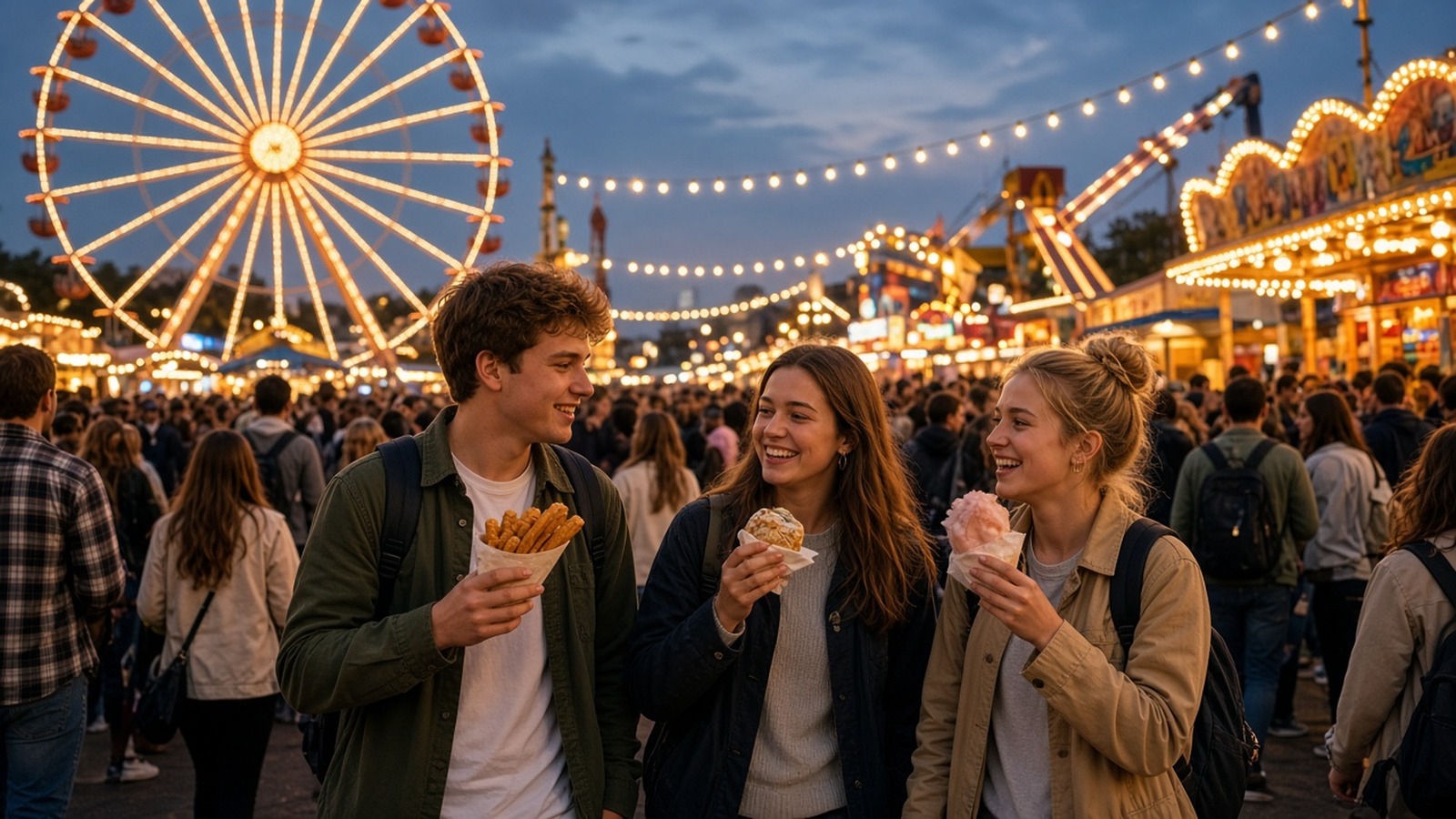
Ferris wheels, roasted almonds, brass bands and millions of happy people. Germany's Volksfests are one of the best surprises waiting for Sri Lankan students, and most of them cost nothing to enter.
Imagine walking out of a lecture on a sunny September afternoon, taking the U-Bahn three stops, and stepping into a world of Ferris wheels, roller coasters, wooden beer tents, brass bands and the smell of roasted almonds. Nobody asks you for a ticket at the gate. You just walk in.
That is a Volksfest, a German folk festival. Almost every German city has at least one, many have several each year, and for international students they are one of the happiest surprises of the first year abroad.
If you grew up going to temple festivals, Vesak zones or the carnival rides at a school fair in Sri Lanka, you already understand the feeling. Germany just does it at a scale you have to see to believe.
The biggest one in the world: Oktoberfest in Munich
You have probably heard of Oktoberfest. What most people do not realise is how big it really is.
According to the City of Munich’s preliminary final report, around 7.4 million guests visited the 2026 Oktoberfest over 16 days, a new all-time record (2025 had about 6.5 million). It happens on the Theresienwiese, a huge open ground in the middle of the city, and locals simply call it the Wiesn.
The best part for a student budget is the entry fee. There is none. The official Oktoberfest site confirms that the festival grounds and the big tents are free to enter, and you do not need a reservation to walk into a tent unless it is closed because it is full (which can happen on weekend afternoons). You only pay for what you ride, eat and drink.
There is also the Oide Wiesn, a nostalgic “old Oktoberfest” section in the south of the grounds with historic carousels, folk music and traditional dancing. In 2026 it cost 4 euros for adults, entry was free after 9 pm, and the old rides were 1.50 euros each. Prices can change every year, so check the official site before you go.
The 2027 Oktoberfest is planned from 18 September to 3 October 2027. If you start your studies in Germany for the winter semester, you could land just in time for it.
It is not only about beer
Here is something many Sri Lankan families worry about, so let us say it clearly. A Volksfest is a family event. The Munich report describes the crowd as families with children, young people, senior citizens and groups of friends who come to stroll, try the rides, eat and celebrate. Plenty of people never touch alcohol and still have a brilliant day.
What you will actually spend your time on:
The rides. Giant Ferris wheels, classic wooden roller coasters, swing carousels, ghost trains and modern thrill rides that will test your courage. Munich lists more than 100 rides and stalls at the Wiesn.
The food. Roast chicken, pretzels the size of your face, grilled fish on a stick, sausages, potato pancakes, and the famous gebrannte Mandeln, sugar roasted almonds that you will smell long before you see the stall. Vegetarian and non-alcoholic options are usually easy to find at the big festivals.
The music. Inside the tents, brass bands play all day and the whole room sings along, standing on the benches. You do not need to understand the German lyrics. By the third song you will be singing anyway.
A small money tip from the city’s own guidance: Tuesdays are family days at Oktoberfest, with reduced prices at many rides and stalls until 7 pm. Weekdays are also far calmer than weekends, and Munich has openly encouraged visitors to come during the week.
Not in Munich? Germany has a Volksfest near you
This is where it gets exciting. You do not need to study in Bavaria to enjoy this. Germany has a festival calendar that runs almost all year.
Stuttgart: the Cannstatter Volksfest. Held on the Cannstatter Wasen every autumn, it is one of the largest folk festivals in Germany. SWR reported around 2.5 million visitors in 2026, with an average of about 4 million in recent years, and visitors in a survey gave it the German school grade 1.6, which is a very good mark. Stuttgart also hosts a spring festival on the same grounds.
Hamburg: the Hamburger DOM. The biggest folk festival in northern Germany takes place three times a year on the Heiligengeistfeld in St. Pauli. The 2026 summer edition ran for five weeks for the first time and welcomed about 1.7 million visitors, with fireworks lighting up the sky over the city. The next one is the Winterdom, running from 6 November to 6 December 2026, with a spring edition planned for March and April 2027. If you arrive in Hamburg in winter, a warm drink and a ride on the Ferris wheel with the city lights below you is a very good first weekend.
The Rhineland and beyond: Kirmes season. In western Germany the word you will hear is Kirmes. Towns and cities along the Rhine hold their own fairs through spring and summer, some of them enormous, many of them small and charming. Even a small town festival usually has a Ferris wheel, a few rides and a row of food stalls.
Smaller local festivals. Almost every district has a Stadtfest (city festival), a wine festival in wine regions, a harbour festival in port cities, or a Frühlingsfest (spring festival). Watch the posters at your tram stop. Something will be happening almost every weekend from April to October.
Visitor numbers and dates change every year, so always check the official city or festival website before planning a trip.
How to enjoy your first Volksfest like a local
Go with friends from your course or your WG. Volksfests are social by design. Long shared benches mean you will end up sitting with strangers, and strangers at a Volksfest become friends very quickly. It is one of the easiest ways to break the ice with German students.
Use public transport. Big festivals are built for it. Munich advises arriving by U-Bahn, S-Bahn or on foot, since there are no visitor car parks at the Theresienwiese. With a Deutschlandsemesterticket in your pocket, getting there is usually covered already.
Travel light. Most large festivals have bag rules for safety. At Oktoberfest, only small bags of up to 3 litres are allowed. Leave the big backpack at home.
Plan a weekday visit if you can. It is cheaper, calmer, and you will actually find a seat.
Take it slow with alcohol. If you drink, know that festival beer is often stronger than people expect and is served in a one litre mug. If you do not drink, nobody will mind. Order a soft drink or an Apfelschorle (apple juice with sparkling water) and enjoy the music.
Why this matters more than you think
Moving to a new country is not only about lectures, exams and paperwork. The students who settle in fastest are usually the ones who say yes to things. Yes to the trip with classmates. Yes to the ride you are scared of. Yes to the bench full of strangers singing a song you do not know.
A Volksfest is the perfect first yes. It is cheap, it is safe, it is joyful, and it shows you a side of Germany that most people back home never hear about. Germans are often described as serious and reserved. Spend one evening in a festival tent and you will see the opposite.
One day you will send your family a photo from the top of a Ferris wheel, with the whole city glowing below you, and they will finally understand why you chose Germany.
Plan your study in Germany from Sri Lanka
Life in Germany starts with a good plan. These free Belfurt tools help you take the next step:
- Study in Germany Cost Calculator (LKR): estimate your blocked account, rent and monthly costs in rupees.
- Master’s Readiness Check: check your grades and profile for German master’s programmes.
- Visa Interview Simulator: practise typical German student visa interview questions.
Questions? Message Belfurt on WhatsApp at +94 77 056 9927 or use our contact page.
Keep reading
- Board Game Nights in Germany: Make New Friends
- Thermal Baths in Germany: Your First Therme Day
- Your First Bundesliga Match in Germany
Sources
Prices, dates and rules change. Always check the official pages before you plan.
- Oktoberfest.de, Preliminary Final Report on Oktoberfest 2026: oktoberfest.de
- muenchen.de, Oktoberfest Bilanz 2026 and Oktoberfest in figures: muenchen.de, muenchen.de
- Oktoberfest.de, Does it cost money to go into Oktoberfest: oktoberfest.de
- Oktoberfest.de, FAQs: oktoberfest.de
- muenchen.de, Oktoberfest key facts 2027: muenchen.de
- muenchen.de and Oktoberfest.de, Oide Wiesn: muenchen.de, oktoberfest.de
- SWR Aktuell, 179. Cannstatter Volksfest Bilanz: swr.de
- hamburg.de, Hamburger DOM aktuell and Termine: hamburg.de, hamburg.de